
Places to Anchor Near Naples FL: Bays, Beaches and Bottoms
Depth alone doesn’t make an anchorage the right fit. The best places to anchor near Naples, FL include the Big Marco River and Marco Island area, where anchorage depths are 7-12 feet, and Keewaydin Island, with depths of 6-10 feet. Naples Bay and Vanderbilt Beach Park offer different settings to compare, but the best choice depends on depth, bottom conditions, shelter, and room to swing.
A calm-looking spot is only part of the picture when you’re choosing where to anchor. Depth, bottom conditions, exposure, and room to swing all matter. Match your vessel and plans to the conditions at the specific location.
This guide compares Marco Island, Naples Bay, and Vanderbilt Beach Park, with practical notes on depth and bottom conditions. It also explains why conditions vary between anchorages and what to assess before settling in for a day on the water.
Table of Contents
1. Big Marco River and Marco Island anchoring
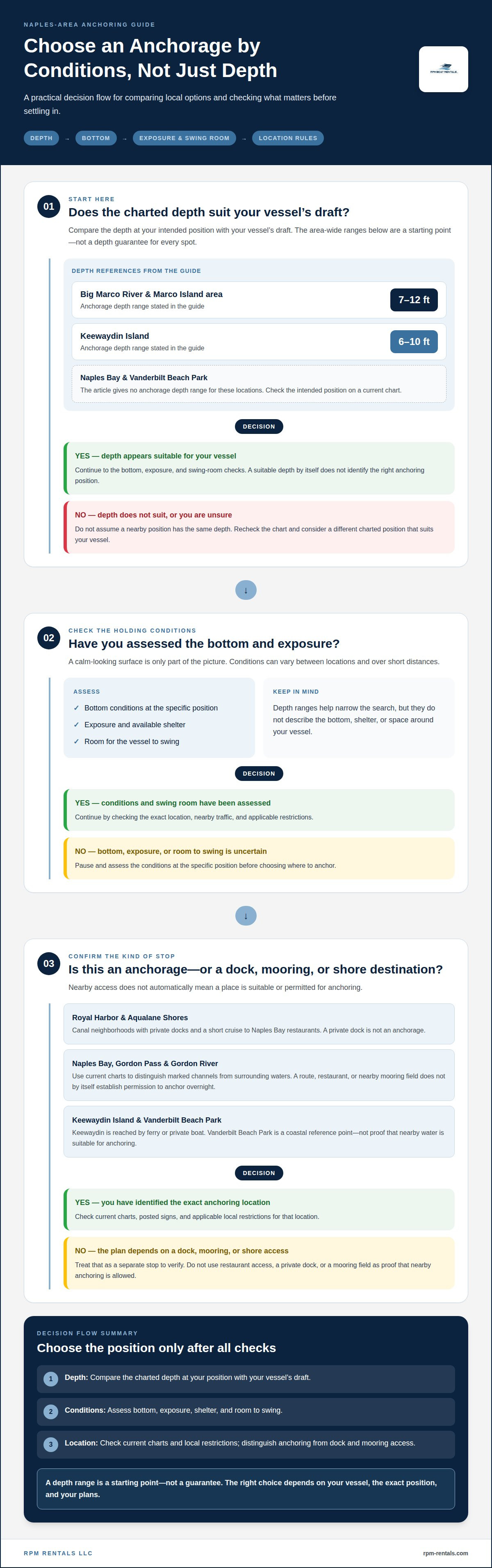
The Big Marco River and Marco Island area offers anchorage depths of 7-12 feet. Keewaydin Island, between Naples and Marco Island, has anchorage depths of 6-10 feet. Those ranges give a useful starting point, but they don’t identify one best spot for every vessel. Compare the charted depth with your draft, then assess the bottom and available swing room before choosing where to anchor.
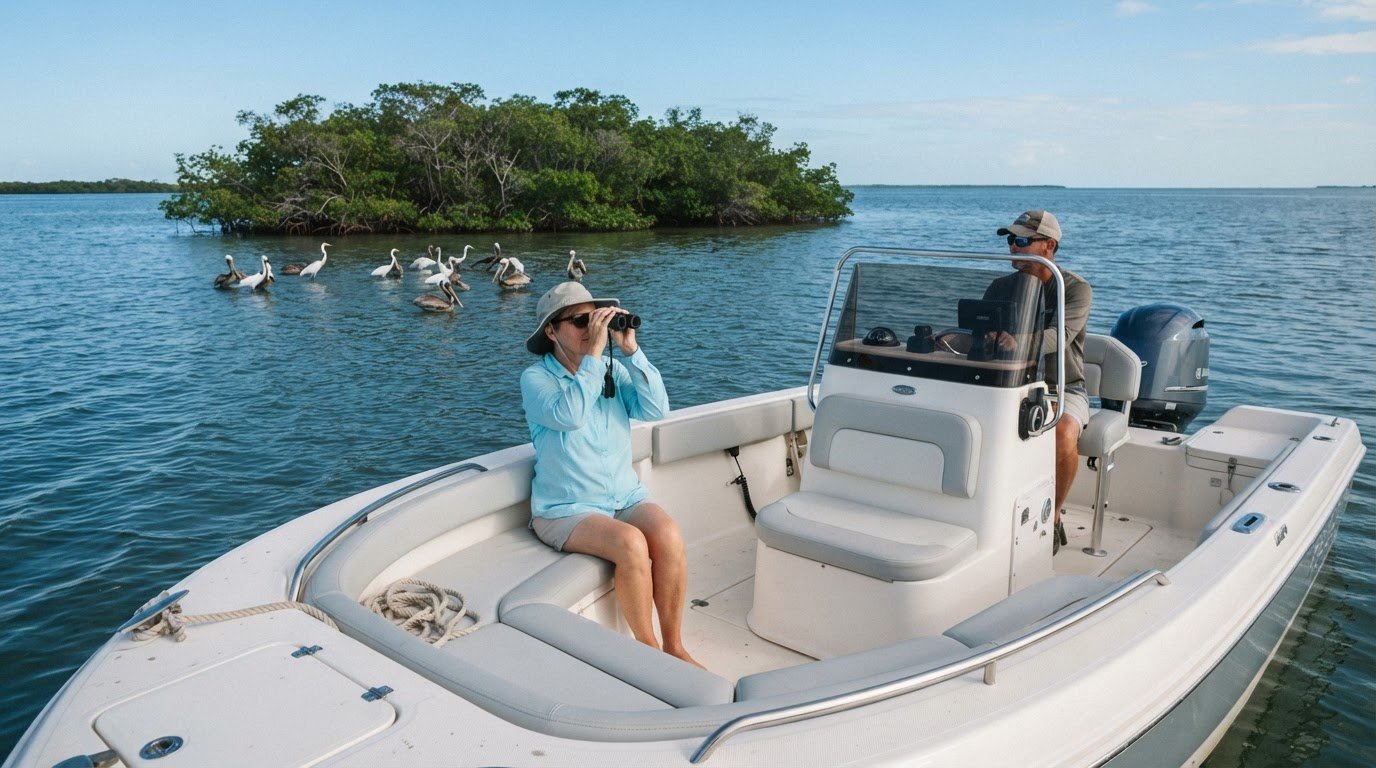
Keewaydin Island is accessible only by ferry or private boat, making its beaches a natural stop for boaters planning time ashore. Choose your anchoring position separately from your beach plans: check the depth and conditions around your vessel rather than assuming nearby water offers suitable holding.
Marco Island can be a starting point for exploring the broader Ten Thousand Islands area. The Big Marco River and Keewaydin offer different options near Naples, while routes farther into the islands require attention to changing depths and bottom conditions. Choose an anchorage that suits your planned destination, since a convenient overnight position may not work for exploring.
Sanibel and Captiva Islands are separate destinations from Marco Island, not interchangeable names for the same anchorage area. If your plans include those islands, consider the whole route rather than choosing a Marco-area stop based only on depth. The best places to anchor near Naples, FL depend on your passage, vessel, and plans ashore.
Anchoring restrictions and time limits depend on the exact location. At Naples City Dock, transient stays are limited to seven days, according to the City of Naples. This is a dock-stay rule, not a general anchoring time limit for the Big Marco River or Keewaydin. Check posted restrictions and distinguish dock rules from anchoring conditions.
Shore access differs by stop. Keewaydin Island is reached by ferry or private boat, while the Dock at Crayton Cove is a casual, open-air restaurant at the City Dock on Naples Bay; it has served diners since 1976. That makes the restaurant a named shore-side option, not proof that every nearby anchorage has facilities. Plan the stop around the actual landing or dock access available at your destination, and keep the anchoring position separate from the shore visit.
2. Boating neighborhoods near Naples Bay
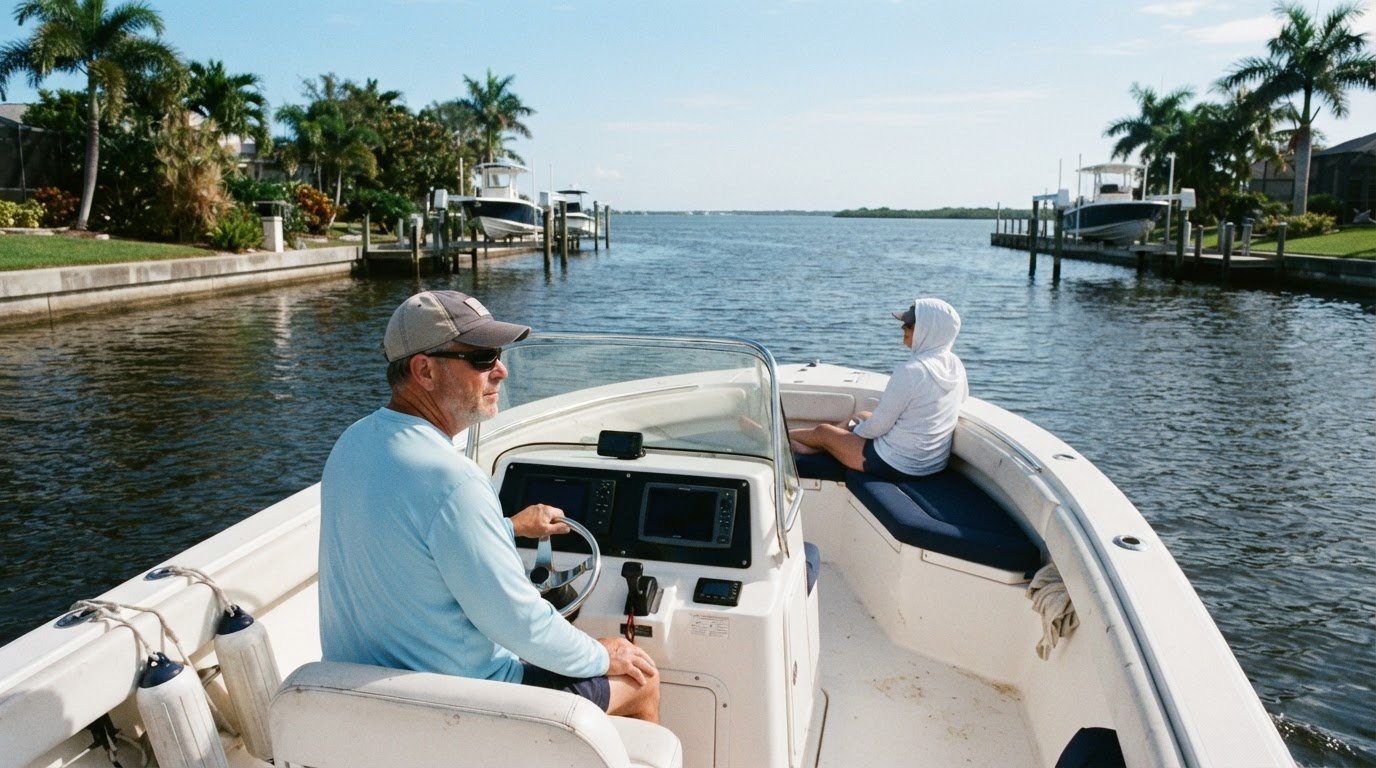
Royal Harbor and Aqualane Shores are canal neighborhoods with private docks and a short cruise to Naples Bay restaurants. They connect residential waterways with downtown dining and can help orient a Naples boating day. But a private dock is not an anchorage, and a nearby neighborhood does not mean every stretch of canal or bay is suitable for overnight anchoring.
Naples Bay brings boats close to downtown and Crayton Cove for a shore-side stop. The Dock is at the City Dock, while Tin City’s Riverwalk and Pincher’s serve seafood along the Gordon River. These destinations help orient your route, but restaurant access does not establish a public place to leave a boat. Plan your landing or dock stop separately from your anchorage.
Peak boating season around Naples runs from November through April, which can shape the feel of local waterways and shore destinations. A Naples Bay route might combine canal neighborhoods, downtown restaurants, and a waterfront stop. Whatever the season, choose an anchorage based on its location, depth, bottom, and room around your vessel, not just its proximity to dining.
Navigation hazards and local rules vary by waterway and anchoring location. Around Naples Bay and Gordon Pass, use current charts to distinguish marked channels from surrounding waters, and follow posted signs and applicable local restrictions. A navigable route, private dock, restaurant, or mooring field does not automatically permit overnight anchoring.
Evaluate overnight options near Naples by their exact location. Naples Bay and Gordon Pass are distinct route references, not blanket permission to anchor anywhere within them. Choose a charted position that suits your vessel, then consider depth, bottom conditions, nearby traffic, and room to swing. These checks also help distinguish an anchorage from a dock or mooring.
Mooring field locations, open spaces, and fees depend on the specific field and may change with its operating conditions. Treat a mooring as separate from anchoring, and consider how its location fits your route through Naples Bay or the Gordon River. Tie questions about access and charges to the specific mooring field instead of assuming one answer applies across Naples.
Shore-side plans can account for dining as well as the route back to the vessel. The writer found parking at Mercato easiest during a late lunch around 1:00 - 2:00. That observation offers a timing point for a visit, while leaving anchoring and dock decisions to be made for the specific location. Keep the shore-side schedule distinct from the choice of where to leave the boat.
For peak-season dining at The Village Shops at Venetian Bay, the writer recommends making reservations months in advance when possible. Treat that as a planning suggestion for a meal, not as information about boat access or an anchorage. A dining reservation and a suitable place to secure a vessel answer different questions; account for each separately when shaping a Naples outing. This can help coordinate a shore stop without assuming dining arrangements establish where a boat may remain.
3. Vanderbilt Beach Park
Vanderbilt Beach Park is a coastal reference point north of central Naples, distinct from the canal neighborhoods around Naples Bay and the river routes near Marco Island. Treat the park as a destination, not proof that nearby water is suitable for anchoring. Before committing, find your intended position on a current chart and assess depth, bottom, exposure, and room to swing.
Start by checking the approach. Use charted navigation information to distinguish navigable water from shallow areas, then compare the indicated depth with your vessel’s draft. Conditions can change over short distances, so water near a beach may differ from a nearby channel. A depth sounder can help you assess the water as you approach, and a cautious speed leaves time to respond.
Next, assess whether the bottom can hold your anchor and whether the position offers enough protection for the conditions. A visible beach does not mean the water is sheltered. Wind direction, passing boat traffic, and room for your vessel to swing all affect your choice. If any factor makes the position unsuitable, choose another spot.
Plan shore access separately. Vanderbilt Beach Park is a shoreline destination; anchoring nearby does not guarantee a dock, landing, or direct route ashore. Identify a suitable place to land before adding a beach visit to your itinerary. This matters especially for an evening stop planned around the waterfront or sunset.
Keep the route realistic. A stop at Vanderbilt Beach Park differs from a Naples Bay outing for downtown restaurants or a cruise past the Village Shops on Venetian Bay, with bayfront dining and sunset views in Park Shore. Fifth Avenue South and Third Street South are separate shore-side destinations. Dining or an evening walk inland should not determine where you anchor.
Compare the beach stop with your vessel’s needs and the rest of your route. Mark the intended anchorage, check the approach and surrounding water, and consider how wind or traffic could affect your position. Then decide whether Vanderbilt Beach Park suits the day better than a bay or river stop. Keeping the beach, anchorage, and shore visit distinct helps you plan each part of your Florida outing.
4. Anchorage depths and bottom conditions
Depth and bottom type work together when you choose an anchorage near Naples. Rookery Bay has anchorage depths of 5-8 feet, while the Marco Island area and Keewaydin Island offer different depth ranges discussed above. These figures help narrow a search, but they don’t establish how well an anchor will hold. Your vessel’s draft, the water beneath it, and the seabed all matter.
Start with a charted depth, then compare it with your boat’s draft and the water level at the planned stop. Depth can change across a short distance, so use a sounder as you approach rather than relying on one chart mark alone. At Rookery Bay, for example, the listed 5-8-foot range is a starting point for assessing a position, not a substitute for checking the actual water.
Next, consider the bottom. Sand, mud, grass, and harder ground can hold differently, and an anchor suited to one type may perform poorly in another. The seabed at a beach may differ from the bottom in a nearby channel. At a Naples-area anchorage, lower the anchor under control and confirm that it sets; a depth reading alone does not prove it is secure.
After setting the anchor, allow room for the boat to move as wind or current shifts. Nearby vessels, shorelines, and marked channels limit the space available. A position that fits at first may become unsuitable if the boat swings toward traffic or shallow water. Choose a spot with usable room around it, and reassess if conditions change.
Bottom conditions also affect the choice between Rookery Bay, Marco Island, and a Naples Bay stop. Each area has its own water and seabed, so do not assume an anchor will hold the same way in each place. A beach visit, waterfront dinner, or stop near shopping describes your shore plans, not how well an anchor will grip.
Follow the same sequence at each stop: choose a charted position, check depth as you approach, assess the bottom, set the anchor, and confirm the boat holds. If any step raises concern, reposition before settling in. A tropical shoreline or nearby resort may look inviting, but neither reveals the depth or bottom beneath your vessel.
For an overnight stop, account for changing conditions and nearby boats before choosing where to settle. Compare your swing room with the shoreline, channel, and other anchored vessels. In Naples, the right position is one that suits your draft and holds on the bottom, not simply the one closest to a street, beach, or evening destination.
5. What are the best legal anchorages near Naples, Florida?
The right choice depends on the exact location, not just how sheltered or close to shore it looks. Naples Bay, Gordon Pass, the Big Marco River, and Rookery Bay are distinct areas; permission at one spot does not apply throughout another. Identify the precise position on a current chart, check for posted restrictions, then assess depth, bottom conditions, traffic, and room to swing.
Keep dock rules separate from anchoring rules. Naples City Dock limits transient stays to seven days, according to the City of Naples. That limit applies to stays at the dock; it does not set an anchoring time limit for Naples Bay, Gordon Pass, or nearby waters. The City Dock also prohibits fishing and bait netting. Do not apply these dock rules elsewhere without evidence that they apply.
For a planned stop near Naples Bay, distinguish among a public dock, private dock, mooring, and anchorage. These are different places to keep a vessel, with different conditions and permissions. Royal Harbor and Aqualane Shores have private docks, but the surrounding canals are not thereby public anchorages. Likewise, a restaurant or marina on the Gordon River does not establish permission to anchor nearby.
Use a location-specific process. First, plot your anchoring position and intended route through Naples Bay or Gordon Pass. Note marked channels, nearby docks, and posted restrictions. Then compare the available depth and bottom with your vessel, and allow room to swing without blocking a route or crowding another boat. Follow any applicable sign or local instruction rather than relying on a general description of the area.
Rookery Bay, Keewaydin Island, and the Big Marco River have documented depth ranges, but depth alone does not establish whether a particular position is legally available. A charted depth describes the water, not permission to anchor. A beach visit at Keewaydin Island is also different from a dock stay at Naples City Dock. Keep your intended activity and exact location clear when planning an overnight stop.
For anchoring near Naples, choose a position whose restrictions, access, depth, and holding conditions suit your plans. The seven-day limit at Naples City Dock is a dock rule, not a region-wide anchoring allowance. Treat Naples Bay, Gordon Pass, Marco Island, and Rookery Bay as separate planning decisions. A boat’s ability to anchor physically does not mean an overnight stay is permitted.
For seasonal planning, the author recommends visiting Naples, Florida, in February or March, when the weather is less humid and sunny. Bridge clearances can vary, so check the clearance for your planned route before setting out. The Dock serves Sunday brunch from 10:30am to 2pm.
RPM Rentals
RPM Rentals LLC offers multi-day boat rentals for exploring Southwest Florida on your own schedule. After comparing Naples-area anchorages, think about your route, time on the water, and the vessel that suits your plans. RPM Rentals LLC offers a fleet that includes the Robalo R200, Hurricane Sundeck, Manitou Aurora LE Tritoon, and Boston Whaler models. Each gives you a starting point for planning a trip around places such as Naples Bay, Marco Island, or Keewaydin Island. Choose your preferred anchoring area first, then consider which rental fits the outing. For details about planning your boating experience, contact RPM Rentals LLC.
Plan a Naples day on the water
A well-chosen anchorage can give your day a comfortable rhythm. Use your shortlist of the best places to anchor near Naples, FL as a starting point, then decide what matters most: time ashore, an unhurried cruise, or a quiet pause on the water. That priority can turn a map into a practical plan without trying to fit every possible stop into one trip.
Match your route and intended stop to the experience you want. Leave flexibility in the schedule and let the waterway, rather than a packed itinerary, set the pace. The goal is not to cover the most ground, but to enjoy your time afloat and shape a day that feels right for you.
Ready to plan your next outing? Talk with RPM Rentals about your boating plans, and look forward to a rewarding day on the water.
Frequently Asked Questions
What are the depths, bottom conditions, and holding quality at Naples-area anchorages?
Depth readings help you assess a location, but they do not show how firmly an anchor will hold. Match the available depth to your boat’s draft and planned route, then consider how the seabed affects the anchor’s grip. Adequate depth does not make a location suitable if the anchor will not set or the boat lacks room to swing. Check depth and holding separately.
How exposed are Naples anchorages to wind, waves, and current by season?
Exposure depends on the anchorage’s position and conditions on the day, not just the season. Wind direction, open-water fetch, nearby landforms, and channel flow affect how wind, waves, and current reach a boat. A spot sheltered from one direction may be exposed when the wind shifts. Compare the forecast with the specific anchorage and route rather than relying on a seasonal label.
Which Naples-area anchorages are safest during thunderstorms or tropical storms?
Storm safety depends on the forecast, shelter, and access to a safe refuge, not a fixed ranking of Naples anchorages. A quiet-looking cove or suitable depth does not make a reliable storm refuge by itself. Follow official weather alerts, consider exposure and the route to protected shelter, and do not treat an anchorage as a substitute for a storm plan. Decide before conditions deteriorate.
Comments